
The acid attack survivor who forces us to lookShaheen Malik lost her own legal battle for justice for an acid attack. This week she won a landmark Supreme Court ruling expanding the law for survivors.
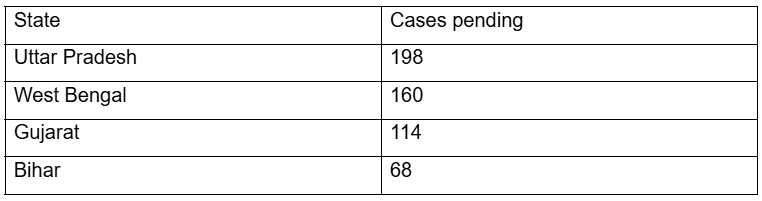
After losing a 16-year legal battle for justice for an acid attack in December 2025, Shaheen Malik knew what she had to do: keep fighting. Not for herself necessarily—though she has filed an appeal against the acquittal of the three people charged with masterminding the attack on her—but for all she represents as the founder of the Brave Souls Foundation. Shaheen had filed a public interest litigation in the Supreme Court WHEN flagging a gap in the law that defines an acid attack survivor as a person “disfigured due to violent assault by the throwing of acid.” But what about those who are not disfigured? What of those like Rashmi Bhatia and Rumana whose husbands forced them to drink acid? They have no external scars, but the attacks left them with grievous, lifelong injuries. The two judge bench of chief justice Surya Kant and justice Joymalya Bagchi agreed with Shaheen’s counsel Mukul Rohatgi that these women should also be considered acid attack victims. It’s an important recognition that will make them eligible to a disability certificate and, therefore, financial assistance, rehabilitation and medical support under the Rights of Persons with Disabilities Act, 2016. In 2019, Rashmi’s husband, Hariram, a medical technician, had forced acid down her throat. That attack burned her food pipe. For years, her sustenance was liquids administered directly through a pipe in her stomach. Even after her food pipe was surgically reconstructed she can barely eat and needs frequent trips to the hospital due to complications. Shaheen’s PIL has been making news for other reasons. In December, the court asked the states and union territories to report cases of acid attack pending in the courts.
Noting the high pendency of trials of cases of acid violence, the Supreme Court ordered high courts to set strict timelines. In January, the same bench asked the state to “consider, formulate, and act upon appropriate rehabilitation measures for victims of acid attacks.” It has asked states and union territories to come up with polices that ensure victims get preference in government jobs. And it urged the central government to consider stricter punishments for acid attack offences, including reversing the burden of proof on the accused. The chief justice even suggested that properties of the accused, including their share in family and joint properties, should be attached to compensate survivors. When Rohatgi told the court how despite restrictions on retail acid sales, acid was easily available, chief justice Kant commented that retail sellers, too, should be held liable. Shaheen’s PIL is resulting in the most far-reaching changes on acid violence since the Supreme Court’s ruling mandating compensation and restriction acid sales in Laxmi vs Union of India in 2015. Brave souls
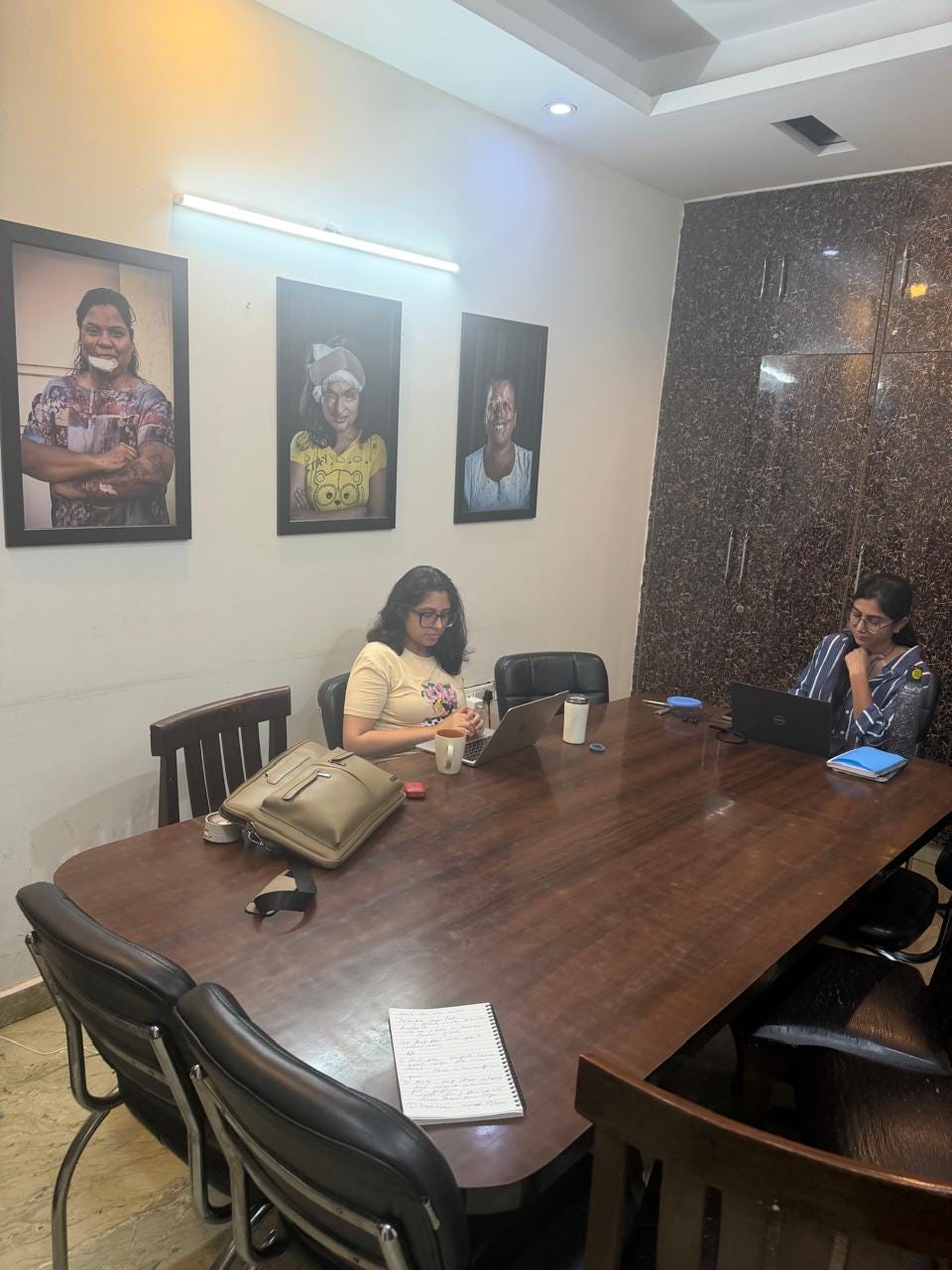
The walls of the small three-room office of the Brave Souls Foundation are plastered with posters of acid attack survivors. Some have lost an eye, others have burn scars across their faces. In all, the women are wearing make-up and look directly into the camera. The message is clear: Do not look away. Acid violence is a particularly heinous form of violence. Nearly 80% of victims are women, most of them young. Most have been attacked by men whose advances they have rejected. An acid attack leaves a lifetime of suffering and disfigurement. Moreover, acid is cheap and easily available. Acid is commonly used to clean toilets. Its retail sale is supposed to be regulated and monitored. But a survey of 80 shops in Delhi by Brave Souls in January 2026 found “widespread non-compliance”. Note only is acid “openly accessible in neighbourhood markets,” shopkeepers rarely verify the identity of buyers. Nor do they maintain registers and records of sales, frequently insisting on cash transactions, suggesting informal and untraceable sales practices. If you cannot purchase an unlicensed firearm, asks Shaheen, how is it that you can so easily purchase acid? Across India in 2023, there were 207 acid attacks, National Crime Records Bureau (NCRB) data shows. The figures for acid attacks in 2024 are still being compiled. The easily availability of acid is not the only problem. Cases drag on for years. The oldest case Shaheen is aware of concerns an attack on a woman called Anupama Kumari that took place 22 years ago. One of the accused in that case died before judgment could be delivered. Most of the women and girls come from impoverished families. The cost of treatment is prohibitive. And although no private hospital is allowed to turn away victims seeking treatment, that protection doesn’t always translate into practice. Many cases then end up with out-of-court settlements. “The police urges victims to compromise—in some cases to even return to their husbands,” says Shaheen. An unfinished fight
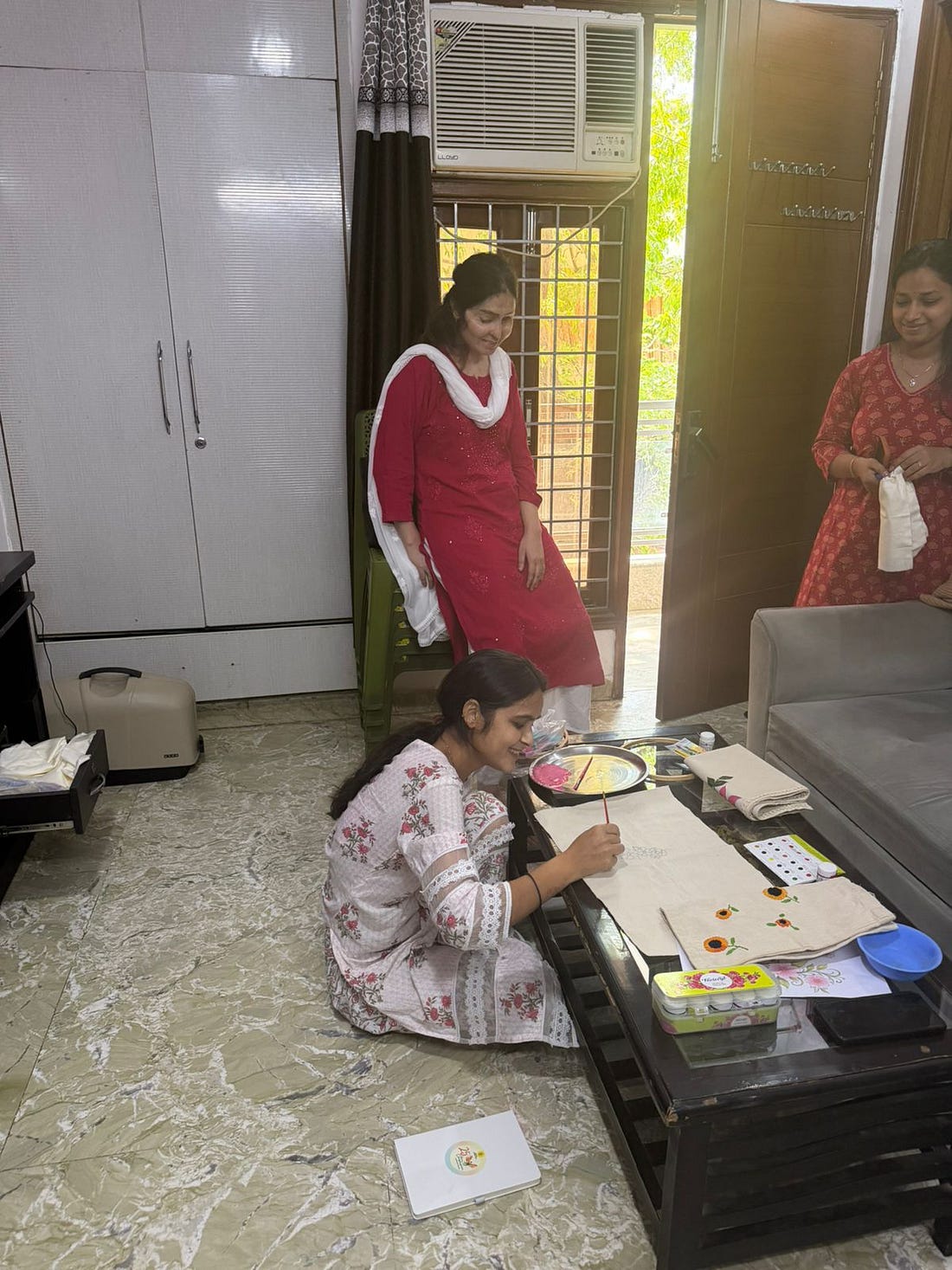
Shaheen Malik had always dreamed of an education and a career, dreams that did not sit well with her conservative family. So, against their wishes, she left her village in Haryana, moved to Panipat and began working while doing her MBA. The problem began when her married boss, Yashwinder Singh Malik became obsessed with her, she says. She tried to quit her job, he called up her prospective employer and ensured the offer was rescinded. He held on to her marksheets and refused to give them back. None of this sat well with his wife Bala. Shaheen says the acid attack on November 19, 2009 was hatched by Yashwinder, Bala and another adult who hired a juvenile to carry it out. The juvenile spent three years in an observation home, then was released and got married. For four years after filing her police complaint there was no follow up or inquiry. Finally, giving up hope of getting justice in Haryana where her boss wielded influence, she transferred her case to Delhi in 2014. In December 2025, the trial court acquitted the three adults of conspiracy. While delivering the judgment, she says, the judge remarked that he wanted to look her in the eye. Her right eye has been fused shut ever since the attack. While Shaheen waits for justice, her foundation is focused on helping survivors patch together a new life. With support from the Azim Premji Foundation and the Population Council of India, Brave Souls has helped 300 acid attack survivors and runs two shelter homes, one in Delhi and the other in Kolkata. Along with health and safety interventions, it conducts educational and vocational support, legal aid and policy advocacy. Crucially, it conducts awareness campaigns, not just against the use of acid but also discrimination against survivors. Even sanctuary is precarious. As I leave the Delhi shelter, which can house up to 20 women, Shaheen tells me the landlord has asked them to vacate. A new premises has been found. It’s more expensive, and in a less busy neighbourhood. Soon, they will have to move, another displacement in a life already marked by violence. Going places
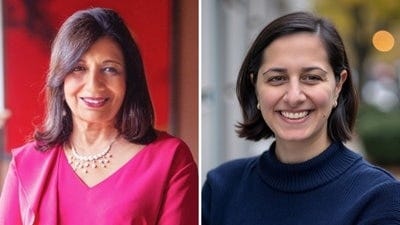
One of India’s best-known corporate leaders, Kiran Mazumdar-Shaw, the founder and head of pharma giant Biocon, has announced a successor. Claire Mazumdar is the founding CEO of a Boston-based biotech firm, Bicara Therapeutics that develops anti-cancer drugs. The daughter of Ravi Mazumdar, Kiran’s brother, the 37-year-old Claire has a burnished resume with degrees from MIT and Stanford (B-school and medical school). She has published research in tumour immunology and cancer epigenetics. “Claire will transition into my role at the right time, so not planning to hang up my boots just yet?” tweeted Mazumdar-Shaw, who started Biocon from her garage in 1978 and grew it to a company with a market capitalisation of Rs 59,723 crore. In other stories
Delhi’s reputation as the most unsafe city for women is intact, as figures from the National Crime Records Bureau demonstrate. In 2024, the most number of crimes against women, 13,396, were registered in Delhi. In the capital city of India, one woman is murdered every three days for dowry—109 cases registered in 2024. The most number of rape cases? Delhi, with 1,058 cases. Sexual harassment? Delhi again with 316. What’s the #1city for cases of cruelty by husbands and relatives? Yup, you guessed right. Delhi with 4,647. The figures relate to 2024, before Rekha Gupta took over as the chief minister in 2025. And so it remains to be seen how India’s only woman chief minister at present tackles what seems to be an endemic problem with the city she governs. More here. The Supreme Court has agreed to test the validity of the controversial amendment to the Transgender Persons law. A clutch of petitions has challenged the constitutionality of the amendments including the removal of the right to self-identify. Advocates for the petitioners, including senior advocate Abhishek Manu Singhvi told the court the amendments were in breach of the NALSA judgment that gave transpersons the right to self-identify. Utkarsh Anand has the story here.
Italy’s first female premier Giorgia Meloni took to Facebook to share a deepfake photo of her posing in lingerie in bed. Complaining that such AI-created images were being used to attack her, she said: “Deepfakes are a dangerous tool because they can deceive, manipulate and target anyone,” she said. “I can defend myself. Many others cannot.”
And finally, good news for Afghan women football players living in exile around the world. They can finally play in FIFA tournaments, bearing their country’s name. For the past eight years since the Taliban’s return and their ban on all women’s sport, FIFA did not recognise the Afghan Football Federation. Now, the world football governing body council has voted to circumvent the rule. Read more here. That’s it for now. I welcome feedback at namita.bhandare@gmail.com. See you again next week. Produced by Shad Hasnain.
|