
In a recent essay, John B. Judis posited Donald Trump as a “world-historical” figure in the Hegelian sense, i.e. as a man who, despite himself, becomes an agent of global revolutionary change:
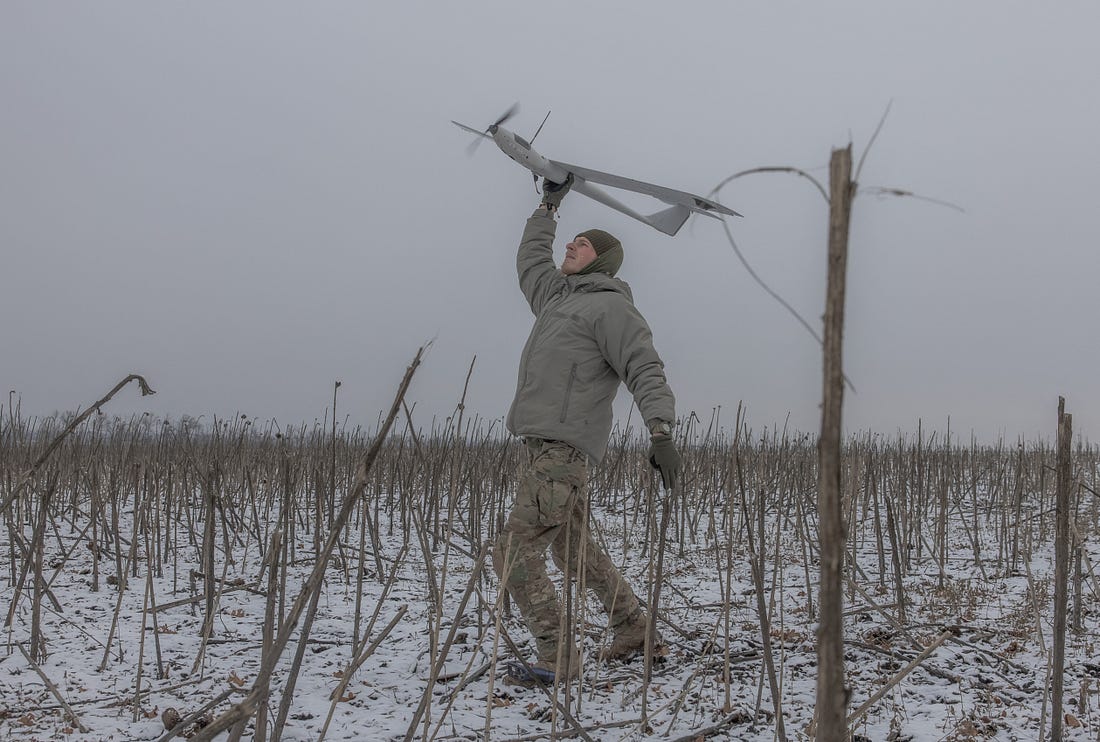
That may sound preposterous at first blush — Trump as a re-run of Alexander the Great? — but when you take a longer look at how Trump has treated Ukraine and Russia, and what has followed, you begin to see why Judis has a point. Because what has happened in the 18 months since Trump’s re-election is truly astonishing. Ukraine is now clearly winning the war, despite Trump’s pronouncement that they had “no cards” to play a year ago. More important, a new defense structure is being assembled in Europe, led by Germany and Britain, to provide continued military support to the nation under attack — with or without the US. This is a new world. It’s been made possible firstly by Ukraine’s lightning-fast innovations in drone warfare; and secondly by Europe finally, really, no seriously this time, grasping that the US security umbrella is over, really over, and it’s beginning to re-arm. That’s why funding for Ukraine’s defense has not collapsed in the past year, despite Trump. It’s been held steady. Ukraine was not abandoned by the West. Just by America. And that wasn’t inevitable. It required a tough call from German Chancellor Merz in particular. But Ukraine survived the nasty bump in the funding road, and now, with Orbàn defeated, looks set to get an extra $106 billion in EU military aid — more than a morale boost after surviving a brutal winter of Russian bombs. And so what we have in the spring of 2026 is a nascent NATO replacement — without the US — willing and capable of defending Europe from Russia, and even putting Russia on the defensive. Who’d have thunk it? We also have a Ukraine that has revolutionized warfare for the 21st century — and whose advice and equipment are now being sought by the Gulf countries being harassed and threatened by IRGC drones in Trump’s war for Israel. That’s some turnaround in global clout. And you can see why Ukraine’s drone army has become an object of fascination. Their drone pilots killed or seriously injured nearly a quarter of a million Russian soldiers in 2025; along with knocking out 30,000 heavy weapons like tanks and artillery. This year, Ukraine is killing or wounding up to 35,000 Russian soldiers a month by drones, while intercepting over 70 percent of Russia’s. This advantage looks set to increase: Ukraine produced 4 million drones domestically last year and is aiming for 7 million this year, and the new wave will have a reach of over 60 miles compared with the current 12. Tanks are largely defenseless against them; infantrymen even more so. A brief glimpse of some of the drone videos show the terror of the murderous drone in an exposed landscape. And drone strikes on refineries and ports have cut Russia’s oil exports by 40 percent, helping to balance out Putin’s oil windfall after Trump’s closure of the Strait of Hormuz. Russia, meanwhile, is in real trouble. They’ve barely made a dent on the frontlines they held in 2022, despite losing 1.2 million men in an effort to do so. Troop losses are now exceeding their replenishment rate, and the country has an acute labor shortage. Putin’s regime has a tough time borrowing money internationally because of sanctions, and he just lost Orbàn as an ally. Venezuela didn’t help; Cuba may be next. No wonder Russia is dramatically scaling back its May Day parade. They have reason to be afraid of Ukrainian drones in Moscow — since the Ukrainians have previously smuggled some in. Gaming this out further, of course, is hard. Wars are unknowable, as Trump is finding out after fucking around so insanely. But it’s possible we could see a Russian retreat or disarray in the face of a new drone wave in the coming months, which would add cred to the new European defense structure, and may catalyze its evolution. Or we might have a desperate Putin try something else — like invading the Baltics — to end NATO for good and terrorize the Europeans. That’s Ignatius’ worry, and I see his point. But the sense that this war was permanently deadlocked or would lead at some point to an inevitable eventual Russian victory is now, it seems to me, an anachronism. Which requires a re-think. My skepticism about the war in Ukraine as a realistic military and geopolitical priority for the US has, I think, been borne out by Trump’s fickleness. America just can’t be trusted. But my pessimism about the war more broadly has been refuted by Ukraine’s innovation and courage and by Europe’s final break with its passive past. I regret my pessimism. Others kept the faith better than I did. On the other hand, of course, if Trump had followed some of the Ukraine supporters’ advice and continued Biden’s more traditional trans-Atlantic policy, necessity might not have concentrated so many European minds so swiftly. So I take Judis’ point. Would this revolution in Ukraine’s war tactics and European responsibility have happened without both Trump’s contempt for Ukraine and threat to Greenland? I wonder. That double-whammy to the remnants of NATO was, it turns out, shock therapy. And it appears to have worked. Would it have been preferable to have avoided the drama and angst, to have nudged NATO’s Europeans toward greater defense capacities without berating Zelensky in the Oval Office and threatening to attack a NATO country? Of course it would have. But history rarely works that way. If now is a time of monsters, in Gramsci’s formulation, then maybe one of them can nudge history along despite himself. Slava Ukraini! (Note to readers: This is an excerpt of The Weekly Dish. If you’re already a paid subscriber, click here to read the full version. This week’s issue also includes: my take on the depressing news over the national debt; a chat with Tom Junod about his philandering dad and masculinity; listener feedback on recent pod episodes and future ones; 11 notable quotes from the week in news, including three Yglesias Awards; 16 pieces on Substack we recommend on a variety of topics; a Mental Health Break of killer choreography; a drab window from DC; and, as always, the results of the View From Your Window contest — with a new challenge. Subscribe for the full Dish experience!) From a new paid subscriber:
Another writes, “I started supporting the Dish because it’s often a lone voice of sanity.” How Great Powers CollapseThis week, we hit a milestone. (Read that piece here, for paid subscribers.) New On The Dishcast: Tom Junod
Tom is a journalist and author. A former staff writer at GQ and Esquire, the film A Beautiful Day in the Neighborhood was based on his Esquire article on Fred Rogers. He’s currently a senior writer at ESPN, and his new memoir is called In the Days of My Youth I Was Told What It Means to Be a Man. It was an intense conversation — about dads, sex, Catholicism, and growing older. Listen to the episode here. There you can find two clips of our convo — on Tom’s dad making him his wingman as a kid, and the dark secrets that Catholic families often carry. That link also takes you to feedback on last week’s pod with Greg Lukianoff on free speech and an assortment of commentary from readers, with my responses throughout. Browse the Dishcast archive for an episode you might enjoy. We have some real stars coming up: Tiffany Jenkins on privacy in a liberal democracy, Adrian Wooldridge on “the lost genius of liberalism,” Jerusalem Demsas on the state of the left, Ben Rhodes on Iran and speech-writing, Harvey Mansfield on modernity, Daniel McCarthy on conservatism, HW Brands on the life of George Washington, John Gray on Trump’s new world, Bob Wright on the evolutionary force of AI, Stephen Grosz on the struggles of love, and Robby George on pretty much everything. Here’s a fan looking forward to HW Brands:
That’s what we were thinking. Please send any guest recs, dissents, and other comments to dish@andrewsullivan.com. Heads UpJim Martin SJ asked me to come on his pod, The Spiritual Life: 
In The ‘StacksThis is a feature in the paid version of the Dish spotlighting about 20 of our favorite pieces from other Substackers every week. A couple examples from this week’s selection:
Here’s a list of the substacks we recommend in general — call it a blogroll. If you have any suggestions for “In the ‘Stacks,” especially ones from emerging writers, please let us know: dish@andrewsullivan.com. The View From Your Window Contest
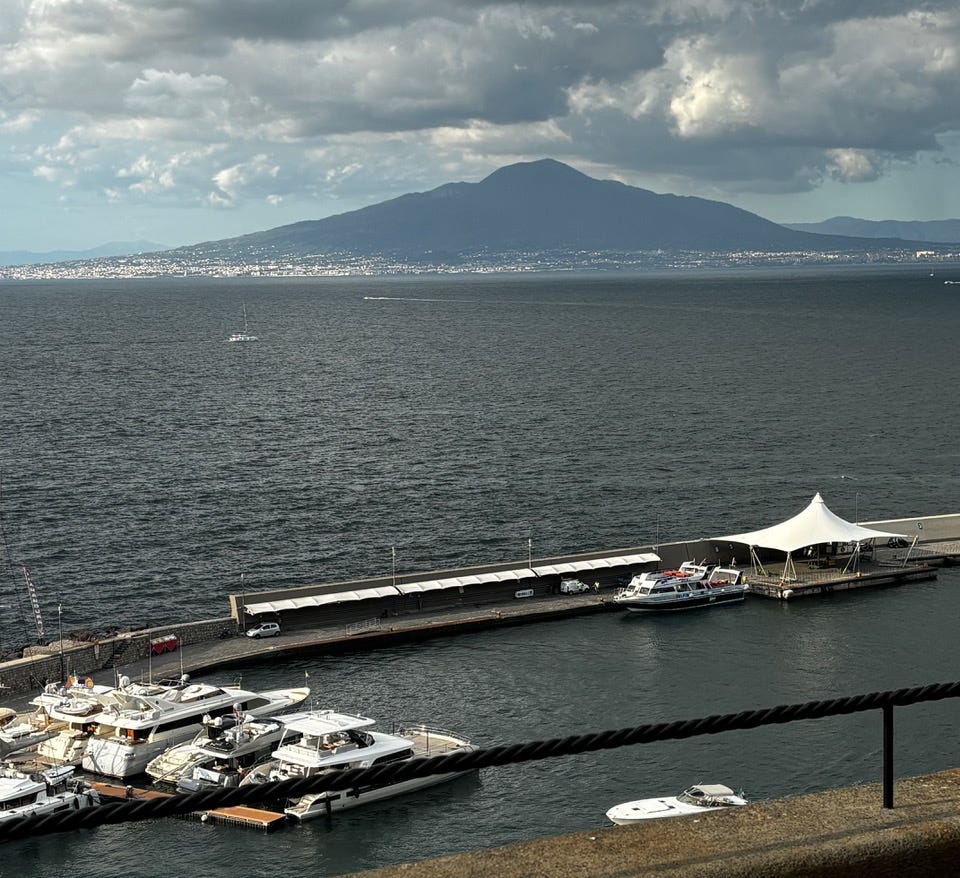
Where do you think it’s located? Email your guess to contest@andrewsullivan.com. Please put the location — city and/or state first, then country — in the subject line. Proximity counts if no one gets the exact spot. Bonus points for fun facts and stories. The deadline for entries is Wednesday at 11.59 pm (PST). The winner gets the choice of a VFYW book or two annual Dish subscriptions. If you are not a subscriber, please indicate that in your entry and we will give you a free month subscription. Contest archive is here. Happy sleuthing! The results for this week’s window are coming in a separate email to paid subscribers later today. Here’s a short entry from last week’s contest:
See you next Friday.
|