Hello,
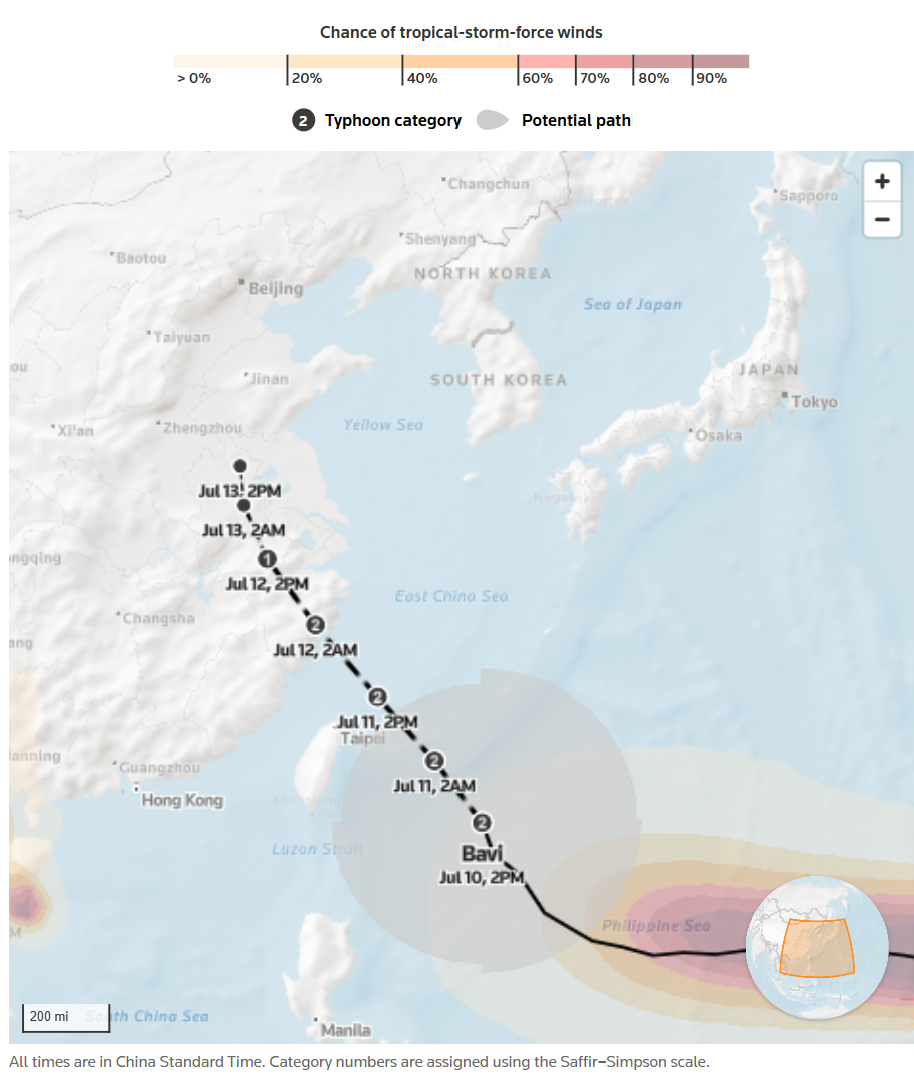
China, Taiwan and Japan are bracing for Typhoon Bavi – possibly the most destructive tropical storm in years – after 10 people died in a landslide in the Philippines due to heavy rains from a southwest monsoon system enhanced by Bavi, a disaster official said.
China, the world's second-largest economy, as well as neighbouring Japan and Taiwan, are increasingly exposed to destructive weather events that scientists link to climate change.
This year is of particular concern because the expected emergence of El Nino could drive up temperatures and help fuel more frequent and intense typhoons.
As Bavi churned southeast of Taiwan, rescue workers in southern China continued to search for victims and survivors of Typhoon Maysak, which killed at least 39 people earlier this week.
In the fishing town of Suao in northeast Taiwan, hundreds of boats crowded into port to shelter from the approaching storm.
"Don't be fooled by the nice and calm weather now. A storm like this could be the most terrifying," said Chen Ming-hui, captain of a 3-metric-ton fishing vessel, recalling how previous typhoons had sunk boats and inundated the town.
Storms of this size have been "fairly rare in recent years," Jason Chang, Taiwan's Central Weather Administration forecaster, told Reuters, adding that Bavi is set to be the largest storm by size to hit the island since 1987.
Authorities in Taiwan warned that Bavi could bring up to one metre (3.3 feet) of rain to mountains north of Taipei. The storm could become Taiwan's most powerful typhoon since Kong-rey in 2024, which killed three people.
Bavi, with winds approaching 200 kph (124 mph), spans about 1,000 km (621 miles) at its widest point, roughly the width of France, and is forecast to skirt northern Taiwan before making landfall in China's eastern Fujian province on Saturday evening, according to China's National Meteorological Centre.
Typhoon Bavi is expected to pass very close to Japan's Sakishima Islands, a remote island chain near Taiwan that is part of Okinawa Prefecture, early on Saturday morning, according to meteorological authorities.
|
|
|
|
1. Twelve killed, 23 missing in one of Spain's deadliest wildfires |
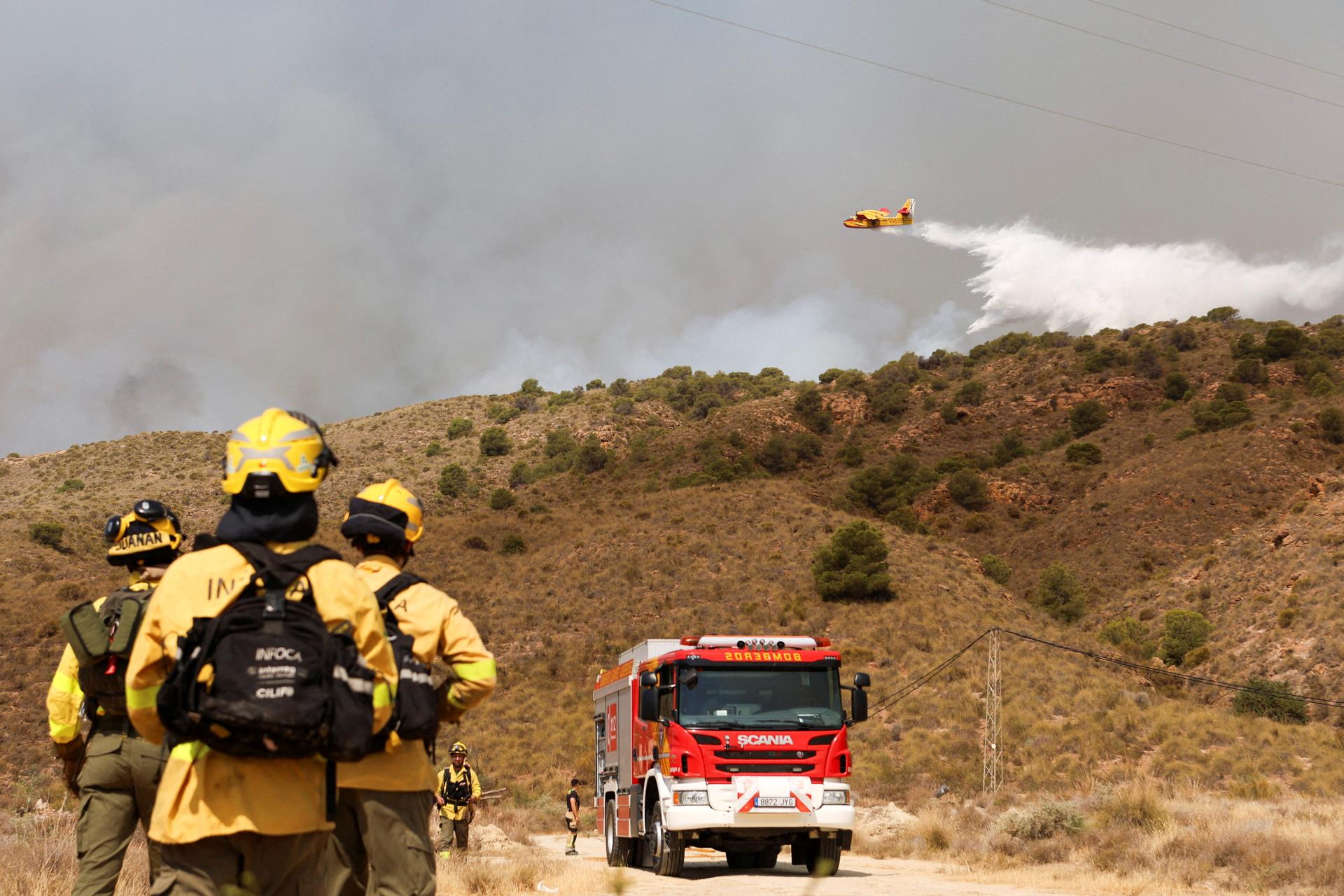
At least 12 people died in a wildfire in Almeria in southern Spain, a popular holiday destination, and 23 were missing, with firefighters still battling to bring one of the country's deadliest blazes on record under control on Friday. "The consequences have been terrible. Everything seems to indicate that, in the case of the dead, the majority - or all of them - are foreign nationals," said Antonio Sanz, head of emergencies in the region of Andalusia. Click here to keep track of Western Europe’s deadly heatwave via the Reuters Climate Monitor.
|
Forest firefighters look on as a firefighting plane dumps water during a wildfire in Los Gallardos, Almeria, Spain. REUTERS/Chema Artero
|
2. US-Mexico border experienced record dust storms in 2025, UN agency says |
Dust storms along the U.S.-Mexico border were unusually frequent and intense last year, according to a report by the World Meteorological Organization. El Paso, Texas, recorded 50 dust-weather days in 2025, more than double the annual average and the highest number since the "Dust Bowl" disaster of the 1930s, the WMO report said. The report also noted that dust sweeping from Mongolia triggered China's worst sand and dust storm in a decade last April.
|
3. EU curbs on Chinese components risk halting renewables’ rollout in Central and Eastern Europe |
In a letter to European Commission President Ursula von der Leyen seen by Reuters, 36 companies and investors warned that restricting Chinese inverters – a critical clean energy component – would disrupt solar and wind expansion in Central and Eastern European countries, slowing down their efforts to move away from fossil fuels. Click here to find out more about what else was mentioned in the letter.
|
4. Backlash on ethanol-blend fuel intensifies in India, puts carmakers in the dock |
Indian Prime Minister Narendra Modi's government is facing mounting anger over a mandatory 20% ethanol-blended fuel policy. For context, the 20% ethanol-blended petrol, called E20, became the only fuel sold at India's 90,000 petrol pumps at the end of last year, initially triggering public uproar which dissipated within weeks.
Now, vehicle owners are demanding choice, and an opposition politician is asking carmakers Maruti Suzuki and Toyota to provide clarity. Click here for a Reuters story on India’s ethanol-blend crisis.
|
5. US EPA proposes easing Biden heavy-truck emissions rules |
The U.S. Environmental Protection Agency is proposing to roll back another crucial climate law under Republican Administrator Lee Zeldin’s leadership. This EPA wants to ease heavy-truck and engine emissions regulations adopted under Democratic President Joe Biden in 2023.
Zeldin said the existing requirements were unworkable, would drive up costs and result in fewer choices. Environmental groups argue the proposed changes will increase pollution and harm public health.
|
|
|
|
|
Click here for a video on how disease outbreaks, poor sanitation, lack of access to clean water, and disruptions to basic medical care could pose the greatest health risks to the tens of thousands of survivors of Venezuela's deadly earthquakes, according to the World Health Organization.
|
|
|
|
- Click here for a history lesson on how batteries became mainstream in a piece by Reuters global energy transition columnist, Gavin Maguire.
- Heat stress causes 18,970 workplace deaths and 22.85 million injuries yearly, writes Ethical Corp Magazine contributor Oliver Balch. Click here to find out what more workplaces should be thinking about to protect staff from heat.
|
|
|
|
|
Sticking with today’s main focus on the powerful Typhoon Bavi, click here for a Reuters live video tracker on the hurricane as it nears Japan's Sakishima Islands.
|
|
|
|
Daylight saving time – moving clocks forward by one hour in summer – has been observed across most of the United States since the 1960s and efforts to make it permanent are gaining renewed attention.
In May, the House Energy and Commerce Committee voted 48-1 to advance the Sunshine Protection Act. The Senate unanimously approved a similar measure in 2022, but the House never took it up due to opposition and the version now heading for House consideration would allow states to opt out.
|
|
|
|
Sustainable Switch Climate Focus was edited by Susan Fenton.
|
|
|
|
|
|
| |
|
|
Sustainable Switch is sent three times a week. Think your friend or colleague should know about us? Forward this newsletter to them. They can also sign up here. Want to stop receiving this email? Unsubscribe here. To manage which newsletters you're signed up for, click here. This email includes limited tracking for Reuters to understand whether you’ve engaged with its contents. For more information on how we process your personal information and your rights, please see our Privacy Statement. Terms & Conditions |
|
| |
© 2026 Thomson Reuters. All rights reserved.
3 Times Square, New York, NY 10036 |
|
|
|
|
|